Let me ask you something. When was the last time you saw a TV commercial and thought: “That brand really gets me”?
Exactly.
Most business videos follow the same tired formula: smiling stock-photo faces, an upbeat royalty-free track, a voiceover rattling off features. Clean. Polished. Instantly forgotten. And yet, small business owners pour money into this every single year — and wonder why the phone doesn’t ring.
There’s a better way. And it’s been sitting under your nose the whole time, borrowed straight from the world of documentary filmmaking.
A documentary-style brand film doesn’t sell your product. It tells your story. And in a world drowning in content, that’s precisely what cuts through.
In this post, I’m going to break down exactly what a documentary-style brand film is, why it works so well for small and medium-sized businesses, what goes into making one, and how to know if you’re ready for one. If you’ve been sitting on the fence about video — or if you’ve tried it and it fell flat — read this first.
What Is a Documentary-Style Brand Film, Exactly?
A brand film is not a commercial. It’s not a product demo. It’s not a 30-second Instagram ad.
Think of it as a short cinematic piece — usually two to five minutes long — that captures the why behind your business. The founding story. The obsession with craft. The faces behind the logo. Shot with the visual language of documentary filmmaking: natural light, observational camera work, real conversations, unscripted moments, and a narrative that unfolds rather than pitches.
The difference between a standard corporate video and a documentary-style brand film comes down to one word: authenticity.
A corporate video tells you a brand is trustworthy. A documentary-style brand film shows you the person who built it with their hands, what keeps them up at night, and why they’d do it all over again. One triggers scepticism. The other builds genuine emotional connection.
I’ve shot in Ukraine during the conflict. I’ve followed refugees-turned-musicians through entire journeys of transformation in the Congo. I’ve documented athletes and artisans and café owners across Baden-Württemberg — people whose stories most people never hear. What I’ve learned from all of it: real beats perfect every single time. If it doesn’t feel real, it won’t work.
Why Small Businesses Are Uniquely Positioned to Win with Brand Storytelling Video
Here’s the irony of the current marketing landscape: the biggest brands in the world are paying enormous money to appear small.
Patagonia. Coors. American Express’s “Shop Small” campaign. They’re spending millions to look like they were shot handheld in someone’s workshop, because that’s what people trust. Meanwhile, the actual small business owner — the butcher who’s been perfecting his cuts for thirty years, the physio clinic that changed someone’s life, the coffee roaster who sources beans personally from a farmer in Ethiopia — that person has the real story. And they’re posting a flat-lay of their product on Instagram instead.
Your unfair advantage isn’t your budget. It’s your story. And documentary-style video production is the format designed to tell it.
Consider what the data actually says:
- 85% of consumers have been convinced to buy a product or service after watching a brand’s video 🎬
- 72% of consumers say they trust video testimonials as much as personal recommendations from friends or family
- 82% of marketers report that video marketing has delivered a positive ROI for their business
- 84% of consumers want to see more video content from brands — a figure that’s held steady for nearly a decade
Those numbers aren’t about polished TV spots. They’re about emotional resonance. And nobody creates emotional resonance better than the authentic, owner-led small business.
The Anatomy of a Brand Film That Actually Converts
Not every documentary-style brand film hits the mark. There’s a craft to it — and it’s not just about having a nice camera. Here’s what makes the difference between a video people share and one they scroll past.
Finding the Real Story First
You cannot write a script for a documentary. You have to find the story.
Before a single frame is shot, the real work happens in conversation. What drove you to start? What’s the hardest decision you’ve had to make that actually cost you money but was the right thing to do? What does your best customer feel after working with you, and why does that matter to them?
These aren’t marketing questions. They’re human ones. And the answers — the real, unguarded answers — are where the story lives.
I always start here. With a strong cup of coffee, no agenda, and the camera off. Because the moment someone stops performing and starts talking, that’s when the footage becomes something worth watching.
Visuals That Carry Weight
A documentary-style brand film lives and dies by the visual truth it captures. This means:
- Hands at work — the physical evidence of craft and expertise
- Environments, not sets — the real workshop, the actual kitchen, the clinic floor
- Expressions, not poses — the laugh that happens when someone talks about what they love
- Movement and texture — the camera that observes rather than directs
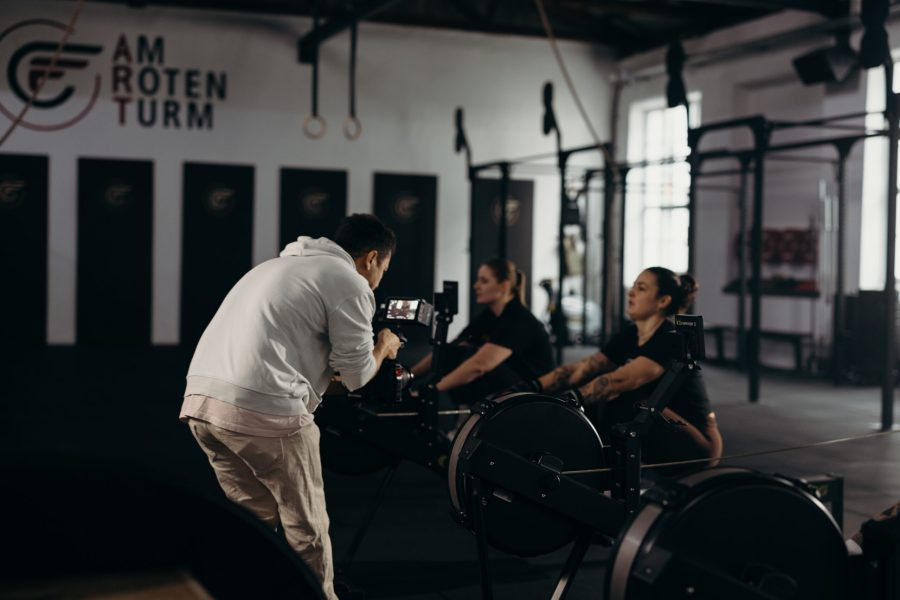
This is what separates a brand documentary from a corporate promo shoot. Nobody asks you to stand here and look at the camera. The camera finds you where you already are.
The Edit: Where Emotion Lives
Shooting great footage is only half the job. The edit is where the story takes shape. Pacing, music choice, interview structure, the moment you decide to hold on a close-up of someone’s hands — these are the decisions that determine whether a viewer feels something or feels nothing.
Tight is almost always better than long. Two and a half minutes of distilled, honest, beautifully paced storytelling will outperform a ten-minute brand documentary every single time. Your audience’s attention is a gift. Treat it like one.
Brand Film vs Corporate Video: Why the Difference Matters for Your Business
Let’s be direct about this, because a lot of video production companies blur the line to sell you what they already know how to make.
| Corporate Video | Documentary-Style Brand Film | |
|---|---|---|
| Goal | Explain products/services | Build emotional trust |
| Feel | Polished, scripted, formal | Real, observational, human |
| Shelf life | 12–18 months (gets outdated) | 3–5+ years (story doesn’t age) |
| Primary use | Sales pages, demos | Homepage, social, pitches |
| What it builds | Awareness | Loyalty and conversion |
A corporate video answers: “What do you do?”
A documentary-style brand film answers: “Why does it matter that you exist?”
For owner-led businesses — artisans, fitness brands, clinics, specialty food producers, architecture firms — the second question is almost always the more powerful one. Your client doesn’t just want to know you do physiotherapy. They want to know that you actually care whether they walk out of pain.
What Does a Brand Film Production Actually Look Like?
Let’s demystify the process, because the biggest barrier I hear from small business owners isn’t cost — it’s not knowing what they’re signing up for. Here’s a typical production arc for a documentary-style brand film:
1. Pre-production (discovery + planning)
This is where I learn your business — not the marketing version of it, the real version. We discuss story angles, location scouting, who speaks on camera, what moments we want to capture. This phase takes as long as it needs to.
2. Shoot day(s)
Usually one to two days. Sometimes three for a more complex story. Documentary-style shooting is less rigid than corporate video — the goal is to capture genuine moments, not hit a storyboard beat-for-beat. Real environments, minimal disruption to your workflow, natural light where possible.
3. Post-production
Editing, colour grading, music licensing, sound design, subtitles if needed. The edit is collaborative — you’ll see a first cut, give feedback, and we refine from there.
4. Delivery
Master file optimised for web, plus social-cut versions (typically a 60–90 second short, and a 15-second teaser). One film, multiple assets.
The whole cycle from briefing to delivery typically runs four to six weeks. Rushed timelines almost always produce rushed results — good storytelling needs room to breathe.
Who Is a Documentary-Style Brand Film Right For?
Not everyone. Let me be honest about that.
If you want a quick product promo or a video you need by next Thursday, a brand documentary is not your format. But if any of these sound like you, it almost certainly is:
- ✅ You’ve been in business long enough to have a real story — at least two or three years, preferably more. The story needs texture.
- ✅ Your brand is built on craft, care, or conviction — you’re not the cheapest option and you don’t want to be. Your client pays a premium because they believe in what you do.
- ✅ You want content that works for the next three years, not the next three months.
- ✅ You’re the kind of business people talk about — your clients recommend you with genuine enthusiasm, but you’ve never captured that on camera.
- ✅ You already have some brand investment — you’ve got a decent website, you’re active on social media, you’re spending on marketing.
If that sounds like you, a documentary-style brand film for your small business isn’t a luxury. It’s the missing piece.
A Word on Production Quality — and What “Good” Actually Means
There’s a misconception I want to address directly: that authentic storytelling means lo-fi. That documentary style means you hand someone a phone.
No.
The best documentary filmmakers in the world work with top-tier equipment precisely because they care about the image. The difference is in the intent behind the camera, not the cost of it. Cinematic colour grading, clean audio captured with professional mics, thoughtful lighting that feels natural — these aren’t luxuries. They’re what separates a brand film that elevates your brand from one that undermines it.
Your audience will feel the difference, even if they can’t name it. Production quality communicates competence before a single word is spoken.
I shoot primarily on Canon Cinema cameras. Because the story deserves the best possible canvas.
How to Brief Your Videographer (and What to Watch Out For)
Whether you work with me or someone else, here’s what to look for — and what to avoid.
Green flags ✅
- They ask more questions about your why than your product specs
- They show you films that made you feel something, not just look impressive
- They have experience with documentary or editorial work, not just commercial promos
- They talk about story first, tech second
Red flags 🚩
- They lead with gear lists and drone shots before understanding your brand
- Their portfolio is heavy on motion graphics and light on real human moments
- They promise a 24-hour turnaround on a 3-minute brand film
- They never ask who your ideal customer is
And when you brief them: don’t write a script. Write a feeling. What do you want someone to feel 30 seconds after the film ends? Start there.
The tkammies Approach: If It Doesn’t Feel Real, It Won’t Work
I’ve been making documentary content professionally for years — in conflict zones, in development contexts, and now with small businesses across Baden-Württemberg and Bavaria who have stories worth telling.
What I bring from that background isn’t just camera skill. It’s the ability to create conditions where people forget the camera is there. Where the real thing surfaces. Where the story you’ve been trying to explain for years finally shows up on screen in a way that makes people lean in.
That’s not a technique. It’s a philosophy.
And it’s the reason why a documentary-style brand film remains the single most powerful marketing asset a small business can invest in — not because it’s trendy, but because it’s true.
Ready to find out if your story is worth telling on screen? 👉 Get in touch.